


Big changes are on the horizon for charter school authorizers and the schools in their portfolios: the end of Elementary and Secondary School Emergency Relief (ESSER) funds. Managing this change will be, for many authorizers, a major activity from now into the fall.
A lot of you learned more last week at NACSA’s Third Thursdays. For those unable to attend, see the recording here and slides here.
As you prepare for the series of progressive deadlines that we call the fiscal escalator (less abrupt than a cliff, with more time to prepare, manage, and arrive safely at the bottom), NACSA is here with key takeaways and links to useful resources.
What’s most important? The deadlines:
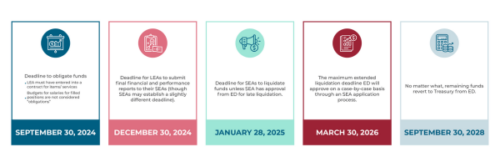
Next steps involve the communication you’ll have within your own authorizing office and with your portfolio of schools about the risks they face as these funds wind down. Which schools are at risk? What can be done now to mitigate those risks? Is your office ready to pay extra attention to next year’s proposed budgets?
Here are some useful resources to keep you steady on this escalator:
- ERS: 6 Key Factors to Assess Every District’s Risk of an Upcoming ESSER Fiscal Cliff
- Edunomics Lab: ESSER Expenditure Dashboard
- U.S. Department of Education: ESSER Guidance
- NACSA: Keep Your Receipts series of resources
Please reach out with any questions to Jason Zwara, NACSA’s Director of Strategic Partnerships at [email protected]